

Telephone:+0086 571 8620 8669|+0086 199 4345 0917
As a core equipment in the fields of thermal power generation and marine propulsion, the steam turbine utilizes steam expansion to drive the rotor to rotate, efficiently converting thermal energy into mechanical energy. It possesses significant advantages such as high power, stable operation, and high efficiency, and is widely applicable to diverse scenarios including thermal power, nuclear power, and industrial drives. With its precise structure, the steam turbine is mainly composed of key components such as the rotor, stator, diaphragms, and bearings. During operation and maintenance, the standardization of disassembly operations directly affects the quality of equipment maintenance and subsequent operational safety.
In the disassembly process of turbine components, chain hoists are manual lifting tools that have become the first choice for on-site operations due to their flexibility, convenience, precision, and controllability. Compared to electric lifting equipment, chain hoists do not rely on power sources and are suitable for various working environments such as workshops and outdoors. They are particularly suitable for lifting components in the narrow spaces inside turbines, effectively avoiding the cumbersome wiring and space constraints of electric equipment.
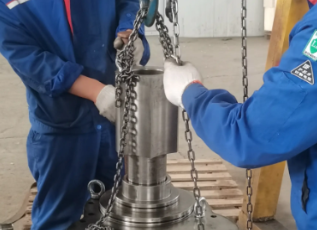
The chain hoist, driven by a manual chain, lifts and lowers the lifting chain, enabling smooth lifting and precise positioning of components. Whether it's lightweight diaphragms, blades, or bulky bearing housings, it can adjust the lifting height and position, accurately align with the disassembly point, and avoid collision damage to components. Additionally, its operation is simple, allowing a single person to complete the preparation and control of the operation, significantly reducing labor input. This not only enhances disassembly efficiency but also reduces operational intensity, truly achieving time and effort savings.
Relying on the precise lifting capacity of chain blocks, the safety and standardization of turbine disassembly operations are ensured, laying a solid foundation for subsequent maintenance and replacement of parts. This facilitates the rapid resumption of equipment operation and ensures the smooth progression of the production process.