People may experience lower back pain, physical and mental fatigue, and even the risk of sudden death under excessive exercise. The 'chain hoist' can also become overwhelmed when frequently overloaded. A chain hoist is the same as a human. Although it cannot speak, its internal body is already undergoing changes.
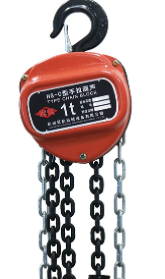
The damage caused by overloading the hand chain hoist is irreversible, and the specific changes are as follows
1. Hook: A hook is a component of a chain hoist that comes into direct contact with a heavy object when lifting it. If it is in an overloaded state for a long time, the hook is likely to bend or even break.
2. Chain: The chain is manufactured through mechanical processing, breaking, bending, welding, and high-temperature treatment. The chain is connected to the hook, and the interface belongs to the welding repair process. Therefore, the chain's ability to withstand overload operation is limited. These chains need to lift heavy objects of different weights according to their thickness, and if they are in an overloaded state for a long time, the chains are highly likely to break.
3. Chain wheel: The chain wheel can be said to be the running track of the chain, which drives the chain to rotate under the weight of heavy objects and the friction of the chain. If overloaded operation occurs, the weight and friction borne by the sprocket will increase, thereby exacerbating the wear of the sprocket.
4. Friction pads: Friction pads are the key to braking in hand pulled wheels. Overloading operation can also increase the pressure on the friction plates, thereby exacerbating their wear. Increasing wear not only shortens the service life of the friction plates, but also seriously affects the performance of the braking system.
So when we are carrying out lifting operations, we must never overload to ensure that the chain hoist is not damaged and to ensure our own safety.

